Statements on Proposed Quarry in SW Allen County
5/20/2026:
What a Quarry in Little River Valley Means for Southwest Fort Wayne
The proposed quarry in the Little River Valley represents one of the most consequential land use decisions Fort Wayne has ever faced. It will determine what kind of community we become.
For families across this area, the question is simple and urgent: what happens when heavy industrial use is placed directly next to our neighborhoods, schools, hospitals, and the natural landscape that defines part of Allen County?
As a licensed real estate professional with nearly a decade of experience, my partner and I have seen firsthand how changes in local conditions affect neighborhoods and property values. In 2019, while studying urban economics at Purdue University Fort Wayne, I conducted research on how major employment centers impact nearby housing markets. That framework continues to inform how I evaluate land use decisions today.
At the core of this issue is something that should be obvious: homes have value because of what surrounds them.
In housing markets, value is not just the home itself. It is the environment around it: traffic, noise, safety, air and water quality, and expectations about what the future of the neighborhood will look like. Economists call these external factors, and decades of research show they are directly reflected in home prices over time (Simons and Saginor, 2006).
This quarry is not a small project. It will be a fundamental change to our city and county.
It would likely bring blasting, constant heavy truck traffic, dust, and vibration felt for miles. These impacts will not stay contained on their site plan. They will move outward into surrounding neighborhoods and into the decisions families make about living here.
The Little River Valley is part of our identity. It is a unique mixture of neighborhoods, schools, hospitals, Eagle Marsh, and the natural landscape that gives this area its character and its value. Families did not move here by accident. They chose it because of what it is.
Once that character is fundamentally changed, it cannot be restored later.
The presence of wetlands and environmentally sensitive land in the valley only strengthens what residents already understand. This is not an industrial corridor. It is a living environmental and residential system that supports the stability of surrounding neighborhoods.
Research on similar industrial uses is consistent on one central point: impacts on property values are highly localized. They depend on distance, intensity, and surrounding land use. Closer proximity generally means stronger downward pressure on value and buyer demand (Ready and Abdalla, 2005).
In real estate terms, this typically shows up in several ways:
Buyers step back from affected areas
Homes may take longer to sell and experience price fluctuations
Long term confidence in neighborhoods may weaken
That is how housing markets behave.
The public statements from US Aggregates and the Heritage Group suggesting that this quarry would increase nearby home values do not fully reflect how local housing markets actually function. Those claims rely on broad regional appreciation trends that fail to isolate the effect of placing heavy industrial operations directly next to established residential neighborhoods.
That distinction is fundamental.
A rising regional market does not erase local disruption. Families do not live in regional averages. They live in specific neighborhoods, on specific streets, making decisions based on what they experience every day.
Homebuyers are not economic models.
They are parents. Workers. Neighbors. People trying to make the best long term decision for their families. They are asking simple questions: Will this area stay peaceful? Will it stay stable? Will it still feel like home ten or twenty years from now?
When the uncertainties caused by projects like this quarry are introduced, buyers become more cautious. Demand shifts. Prices follow.
None of this is to deny the importance of aggregate mining. It is essential to infrastructure, construction, and economic growth across Indiana. But importance is not the same thing as compatibility.
The most basic principle of responsible planning is simple: not every necessary use belongs in every place.
Southwest Fort Wayne did not develop by accident. It was shaped over time by land use decisions that balanced residential neighborhoods with environmental land and preserved a quality of life that people specifically chose when they moved here.
That balance is now at stake.
This is the point where this conversation becomes larger than zoning or permits. It becomes about direction.
Do we protect the stability, character, and value of the neighborhoods families have built their lives around? Or do we allow irreversible industrial activity to be placed in the residential and environmental backbone of Southwest Fort Wayne?
For me, the answer is clear.
As I stated on April 5th,I stand with my neighbors in opposing the proposed quarry in the Little River Valley.
People must come before corporate profit.
This statement reflects my personal views as a candidate for public office and is not issued on behalf of any brokerage or affiliated organization.
References
Ready, R. C., & Abdalla, C. W. (2005). The impact of open space and potential local disamenities on residential property values in Berks County, Pennsylvania. American Journal of Agricultural Economics
Simons, R. A., & Saginor, J. D. (2006). A meta-analysis of environmental externalities and residential property values. Journal of Real Estate Research
Strauss, J. (2013). Does housing drive state-level job growth? Building permits and consumer expectations forecast economic activity. Journal of Urban Economics
April 7, 2026
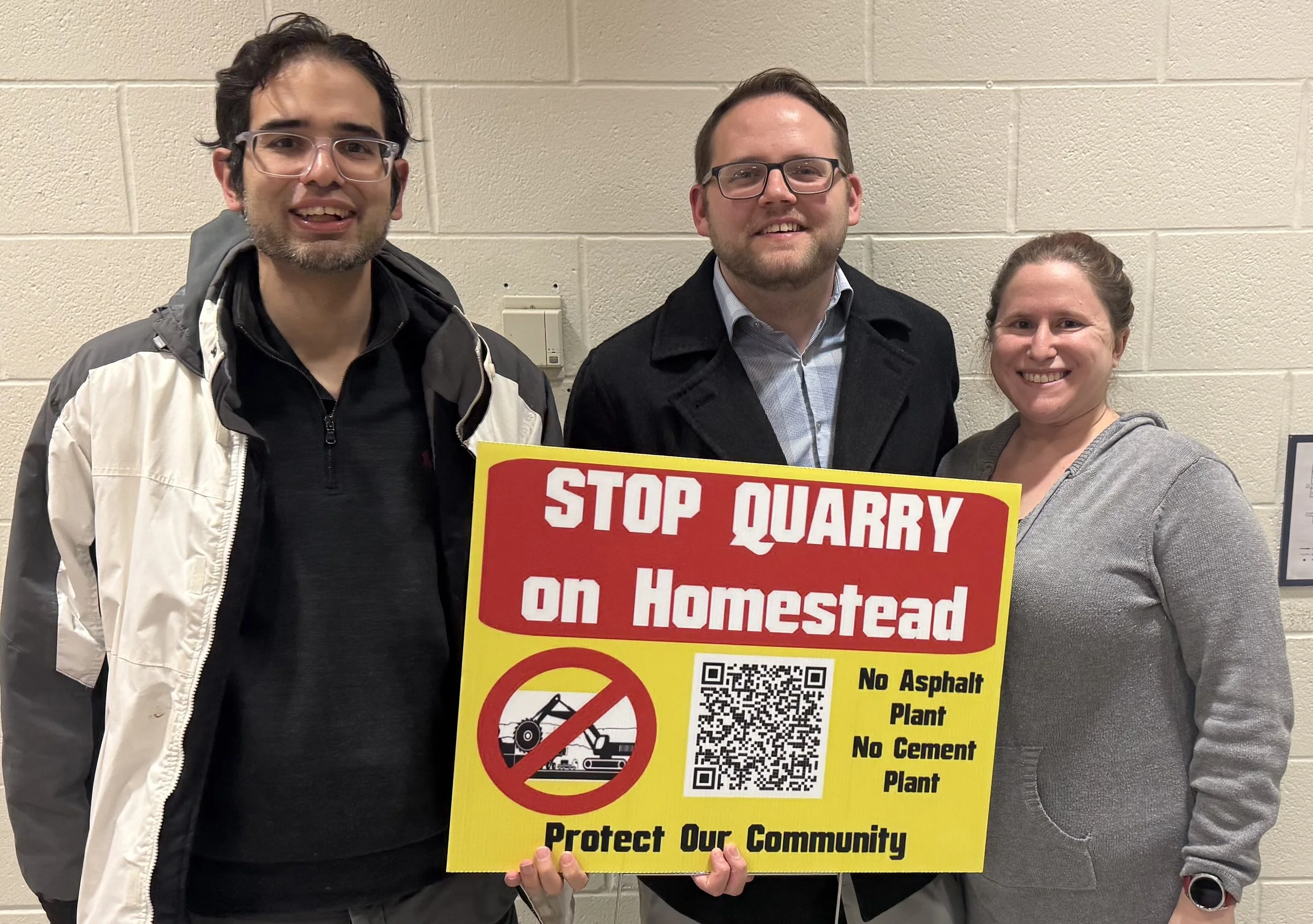
Thank you Sharon Wight and Jorge Fernandez for standing in opposition with me..
We’re calling on our peers across State Representative, State Senate, and local races… as well as our opponents, to join us.
And I’m challenging my opponent directly to join me in speaking out against this industrial project next to the homes and wetlands of his constituents.
People must come before corporate profit.
-Wesley Haffenden
April 4th, 2026
As the Democratic candidate for State Representative (District 83), where the Little River Valley quarry is proposed, I stand with my neighbors in opposition.
This is not about being anti-growth. Putting heavy industry in a floodplain, next to wetlands, and right by our neighbors homes, schools, and hospitals just does not make sense. Families here should not be the ones taking on the risk so someone else can cash in.
People have every right to be concerned about their water, their air, and their health.
We all want good jobs and a strong economy. But we should not have to sacrifice our neighborhoods to get there. Our community deserves better and people must come before corporate profit.
-Wesley Haffenden